
DELAY THE COD SUPPLIER DEADLINE: New York Cannabis Retailers Deserve Transparency, Fairness, and Due Process
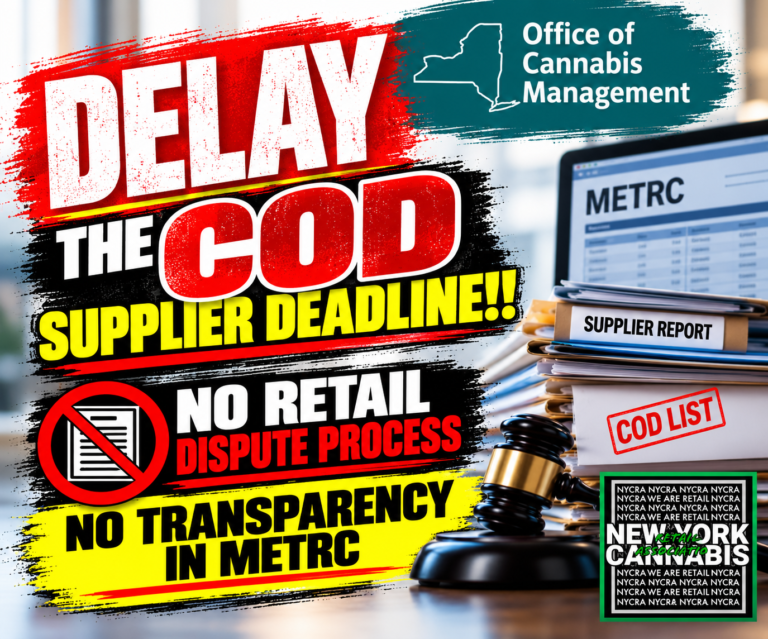
New York Cannabis Retail Association (NYCRA) Calls on the Office of Cannabis Management to Address Serious Flaws in the State's Cannabis Payment and Reporting Regulations
October 22, 2026, is the supplier reporting deadline for older unpaid invoices involving cannabis transfers made before September 15, 2026.
New York’s legal cannabis industry is facing another significant challenge, and this time, the threat is coming from regulations intended to create financial accountability.
The New York Cannabis Retail Association (NYCRA) is calling on the New York State Office of Cannabis Management (OCM) to delay enforcement of the current Cash on Delivery (COD) supplier reporting deadlines until meaningful safeguards are established to protect licensed cannabis retailers.
Let’s be clear: Retailers should pay their suppliers, and suppliers deserve to be paid. That has never been the argument.
The problem is that the current regulatory framework places enormous pressure on retailers while failing to provide adequate transparency, dispute protections, and timely mechanisms for correcting inaccurate or outdated delinquency reports.
We cannot continue building a legal cannabis industry where retailers are expected to meet strict financial obligations without being given equally strong protections.
1. A 30-Day Payment Deadline That Ignores Business Realities
Under 9 NYCRR § 124.2, New York’s cannabis payment regulations establish a 30-day payment framework, with additional reporting and notification requirements tied to delinquent invoices.
For an industry still struggling with access to traditional financing, high operating expenses, tax burdens, and fluctuating inventory demands, these deadlines create serious financial challenges.
Retailers are not operating under the same conditions as established businesses in other industries.
Many cannabis retailers cannot access conventional lines of credit, affordable working capital, or the banking products routinely available to other businesses.
Meanwhile, retailers must manage payroll, rent, insurance, taxes, compliance expenses, and inventory purchases.
NYCRA is advocating for extending the standard payment period from 30 days to 45 days, with an additional seven-day reporting window.
This is not an attempt to avoid paying suppliers. It is an effort to establish realistic payment terms that reflect the financial conditions of New York’s emerging cannabis marketplace.
2. No Adequate Retailer Dispute Process Before COD Consequences
One of our greatest concerns is the lack of a sufficiently transparent and protective dispute process for retailers facing supplier delinquency reports.
What happens when a supplier reports an invoice that has already been paid?
What happens when a credit memo has not been applied?
What happens when there is a legitimate disagreement over damaged products, missing inventory, incorrect quantities, or invoice discrepancies?
What happens when a retailer submits payment, but the supplier’s records have not been updated?
These are not hypothetical business situations. Payment discrepancies and reconciliation delays occur across virtually every industry.
Yet the consequences for a cannabis retailer can be substantial.
Being placed on the COD list can disrupt purchasing relationships, restrict access to supplier credit, and create additional pressure on a retailer’s ability to maintain inventory.
A retailer should have a meaningful opportunity to review, challenge, and resolve a disputed delinquency before facing consequences that could threaten business operations.
NYCRA believes OCM must establish a formal dispute process with clear evidentiary requirements, reasonable response periods, and protections against premature or inaccurate reporting.
3. Lack of Invoice Transparency Within METRC
New York has invested heavily in METRC as the state’s cannabis track-and-trace system.
If METRC is going to play a role in supplier delinquency reporting, then retailers must have meaningful visibility into the information being reported against their licenses.
NYCRA is calling for greater transparency surrounding supplier invoices, payment status, credit memos, reporting dates, and disputed balances.
Retailers should be able to identify:
Which invoices are being reported as delinquent.
The original invoice amount and applicable payment terms.
Any credits or adjustments applied to the balance.
The date a supplier submitted a delinquency report.
Whether a reported payment or dispute has been acknowledged.
You cannot demand accountability from retailers while denying them meaningful visibility into the records being used to determine their financial standing.
Transparency should not be optional when a reporting system can directly affect a licensed business’s ability to operate.
4. Delayed COD List Removal Can Create Unnecessary Business Harm
Another serious concern is the process for removing retailers from the COD list after payment has been made or an error has been corrected.
We live in a technological world where financial transactions, banking notifications, and electronic records can be transmitted almost instantly.
Why should a retailer remain subject to COD restrictions after a supplier has confirmed payment?
NYCRA is proposing that OCM establish clear removal deadlines supported by METRC API integration and automated reporting.
Our recommended standard is straightforward:
Direct API integration with METRC should be established to ensure businesses are automatically and immediately added to or removed from the COD list in real time, eliminating unnecessary delays and ensuring accurate payment status reporting.
We are also advocating for appropriate penalties when suppliers knowingly fail to correct or remove inaccurate delinquency reports if API integration isn’t implanted.
Financial accountability must apply to both sides of the transaction.
5. Mandatory Supplier Reporting Threatens Established Business Relationships
The cannabis industry was built on relationships.
Suppliers and retailers depend on each other, and successful partnerships require trust, communication, and goodwill.
Under the current reporting framework, suppliers face regulatory obligations to report delinquent accounts, even when they may prefer to work directly with a retailer to resolve an outstanding balance.
This creates a troubling dynamic.
A supplier that has worked with a retailer for years may understand the circumstances behind a delayed payment and believe the account can be resolved cooperatively.
However, mandatory reporting requirements can limit the flexibility of those relationships.
NYCRA believes suppliers and retailers should have greater freedom to establish mutually agreed-upon payment terms, provided those arrangements are properly documented and compliant with reasonable regulatory safeguards.
The state should encourage responsible financial relationships, not create unnecessary conflict between the businesses it licenses.
6. The Risk of a Larger Industry-Wide Financial Bottleneck
Perhaps the greatest concern is what happens when these regulations affect hundreds of retailers simultaneously.
New York’s cannabis market is still developing. Retailers are managing growing competition, shifting wholesale prices, inconsistent product demand, and limited access to capital.
If large numbers of retailers face tighter payment deadlines and COD restrictions at the same time, the consequences may extend far beyond individual businesses.
Retailers could be forced to reduce inventory purchases.
Suppliers could experience declining orders and delayed revenue.
Cultivators and processors could face additional pressure as wholesale inventory accumulates.
Consumers could experience fewer product choices and less consistent availability.
Ultimately, financial pressure throughout the regulated supply chain could weaken the very businesses New York has worked to establish.
A regulation intended to improve payment accountability should not create a chain reaction that destabilizes the legal cannabis marketplace.
7. What NYCRA Is Asking OCM to Change
NYCRA is calling for immediate consideration of the following reforms:
Delay the current COD supplier reporting deadlines until adequate retailer protections and reporting transparency are established.
Extend standard payment terms from 30 to 45 days, with an additional seven-day reporting window.
Create a formal retailer dispute process that allows legitimate payment and invoice disagreements to be reviewed before COD consequences take effect.
Require transparent supplier invoice records within METRC, including payment status, credit memos, and delinquency reporting information.
Implement METRC API connectivity for prompt COD list removal when payment is verified or an erroneous report is corrected.
Establish penalties for suppliers who knowingly fail to correct inaccurate reports or remove resolved delinquencies.
Preserve supplier-retailer goodwill by allowing reasonable, documented payment arrangements and opportunities for voluntary resolution.
These changes would not eliminate supplier protections. They would create a more balanced regulatory structure that holds everyone accountable.
New York Cannot Afford to Lose More Licensed Retailers
The legal cannabis industry was supposed to create opportunities for entrepreneurs, social equity applicants, small businesses, and communities historically impacted by cannabis prohibition.
Those opportunities become meaningless if regulatory requirements make it increasingly difficult for licensed businesses to survive.
Retailers have invested their savings, secured financing, hired employees, signed leases, and committed themselves to operating within New York’s legal marketplace.
They deserve regulations that recognize the challenges of running a legitimate cannabis business.
We support accountability.
We support suppliers being paid.
We support responsible business practices.
But we do not support a system that can penalize retailers without adequate transparency, due process, and timely correction mechanisms.
Our Message to OCM Is Simple: DELAY THE COD SUPPLIER DEADLINE.
Give the industry time to establish fair payment terms.
Give retailers a meaningful dispute process.
Give both suppliers and retailers transparent reporting systems.
And most importantly, give New York’s licensed cannabis businesses a reasonable opportunity to succeed.
New York’s cannabis industry needs solutions that strengthen the supply chain, not regulations that risk breaking it.
New York Cannabis Retail Association (NYCRA)
Advocating for fair regulations, sustainable businesses, and the long-term success of New York’s licensed cannabis retail industry.
WE ARE RETAIL.